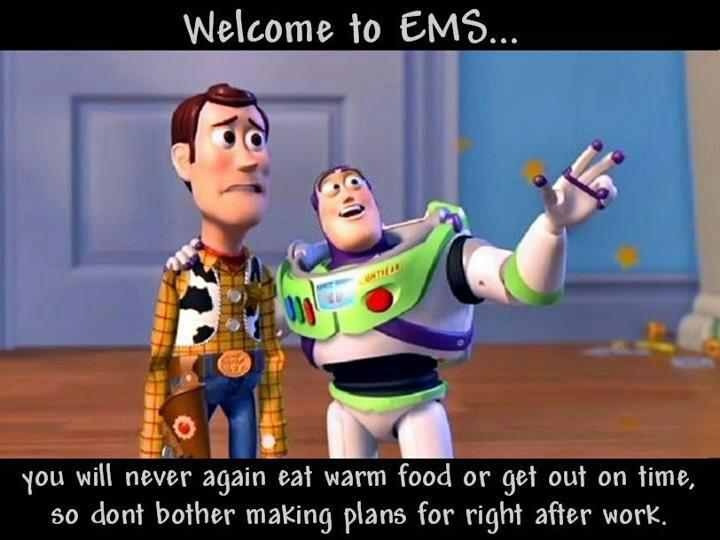
Today is your first day on the job. You are excited to start this new adventure, but you’re also terrified. You think you are going to kill every patient you come into contact with, and have no clue what you’re doing. You went through EMT school, but you feel like you didn’t learn a thing.
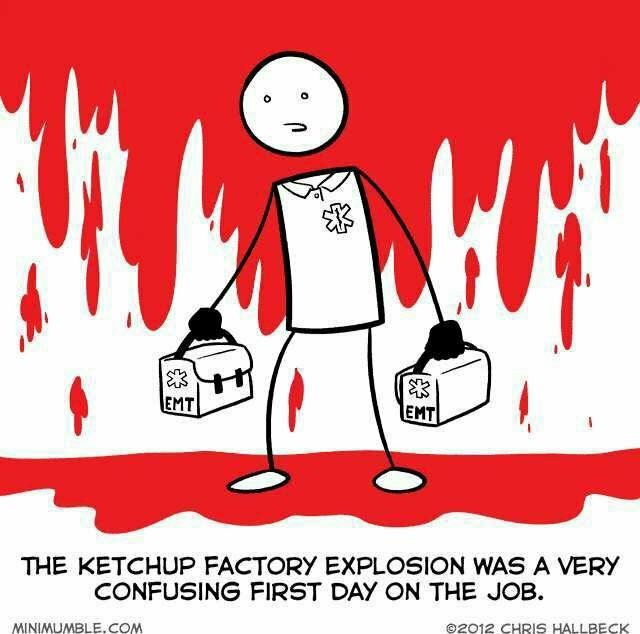
It’s ok, we’ve all been there before…
So let’s get through this shift one step at a time. First, clock in and find out your truck assignment. Introduce yourself to your partner. Is your truck BLS or ALS today? Now go through your equipment. You’re going to want to make sure it’s all accounted for, all in good working order, and all batteries are fully charged. This is a good time to go over any equipment you are unfamiliar with. Ask your partner or supervisor for help. Trust me, it’s better to do this now then when you need it.
Before you go in-service, check your truck. Some services will check the main vehicle components for you, but you can never be too sure. I’m sure you’re dying to play with all the fancy buttons, so go ahead. You need to know what each of them does and what order you need to turn them on. Buttons not working? Make sure you have the “master” switch on. Yeah, we’ve all done that too.
Alright, now we’re ready. Here is a general rule of thumb: NEVER SAY THE WORD QUIET!!! Do not verbally acknowledge the fact that it isn’t busy – don’t even think about it. The EMS gods will know, and you will run calls until you drop dead. Ask your partner as many questions as you have. You can’t learn anything if you don’t ask questions. I was raised in EMS that the medic’s job was not to be a medic, but to teach the EMT to become a medic. Plus, the more they teach you, the less they have to do!
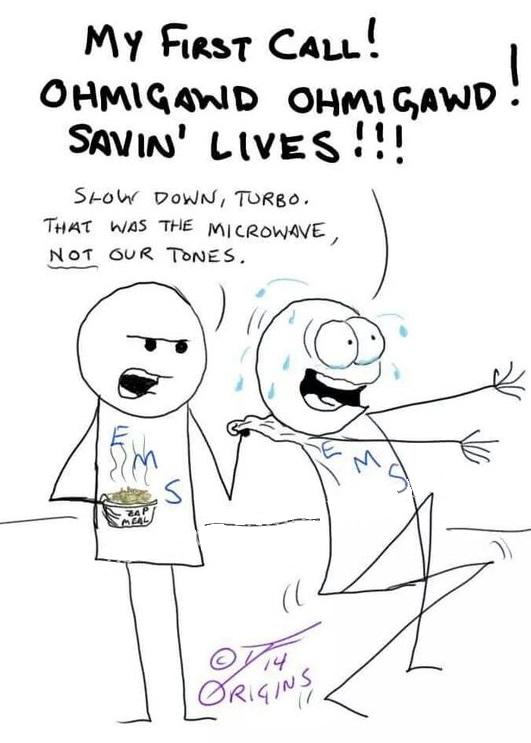
So, you’re on your first call, but where do you park??? Well, it depends on the call. If you are working a motor vehicle collision (MVC), then you want to position your truck in the safest location for you and your patient. If there is a fire engine on scene, then they can block traffic with the truck and therefore you can park past the engine, and create a “wall” of safety for you and your patient. But what if you are the only ones on scene? Well, park your truck diagonally in front of the accident, so if a vehicle were to strike the truck, it would hit the side of the truck and absorb as much of the impact as possible. Also, turn the front wheels away from where you will be standing, in the event that the truck rolls after a collision. If possible, try to create a “block” of emergency vehicles to shield yourself, your crew, and the patient from not only secondary collisions, but for patient privacy.
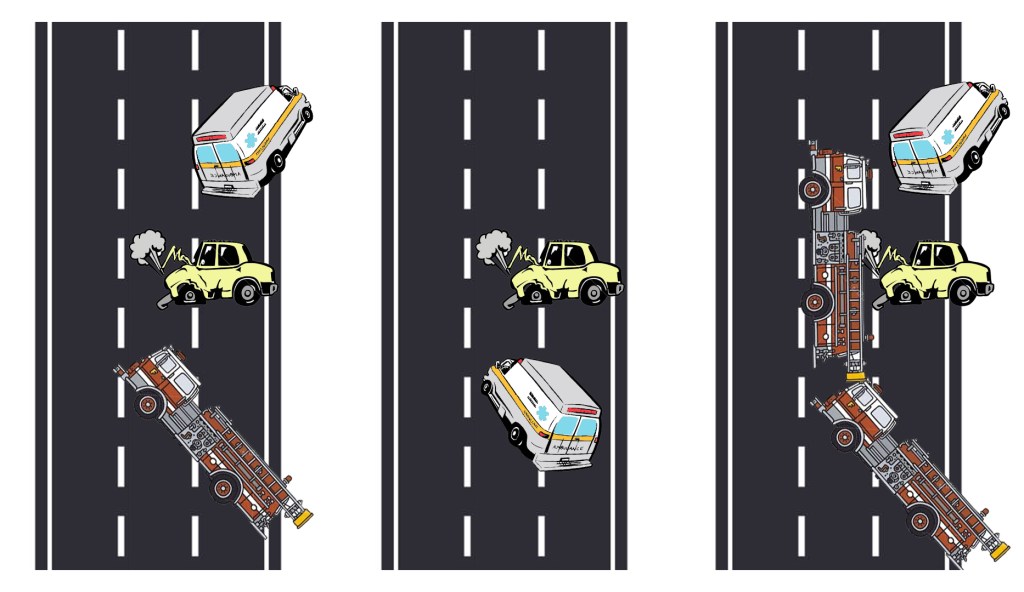
Now we are in the truck rendering aid, and your partner just asked you to do something that you don’t know how to do. ASK FOR HELP!!! As a Field Training Officer, nothing upset me more than a student or new hire telling me they knew how to do something, only to find out that they didn’t and made errors. They won’t (shouldn’t) get mad at you. This is what’s best for you and your patient – do no harm remember?
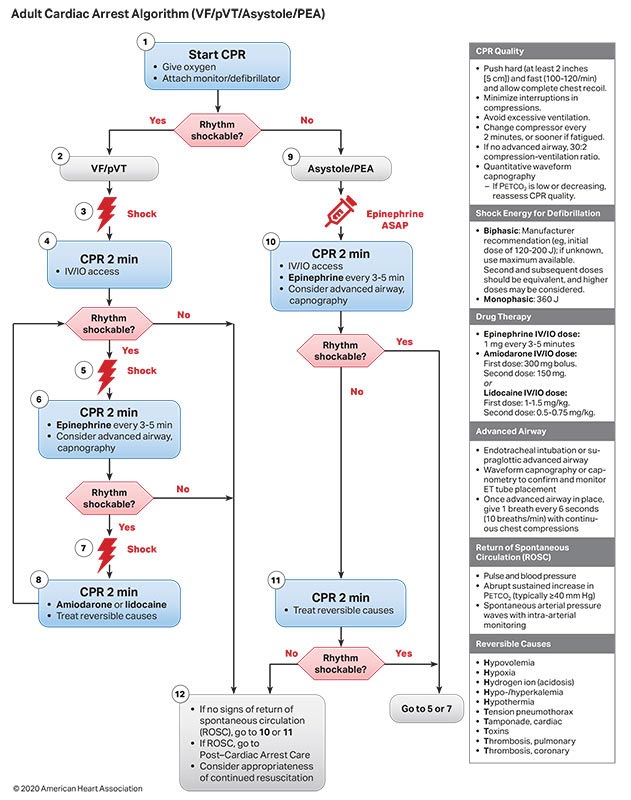
After every call, review your protocols to determine what went right and wrong with your call. One of the best ways to learn is from your mistakes. I had a VERY smart medic tell me one time, that you run every call three times before you become proficient. The example he gave me was a cardiac arrest. The first time you run an arrest, you may forget something major, like giving them epinephrine. The second time, you remember the epi, but completely forgot to document the times you gave it. Finally, you have swore to run this call 100% effectively. You run the call and everything goes to plan. This is the typical progression of calls we run. Any EMT/Medic that seems to do a pretty good job, didn’t get that way overnight. We all learn from trial and error. Granted, sometimes this comes easier for some, but trial and error none the less.
Congrats, you’ve completed your first shift. Go home and relax. Don’t go home and revisit the calls you’ve run. Don’t second guess yourself and wish that you had done things differently. Learn from your mistakes and do better next time. It’s just part of the process. But leave it at work. Off time is just that, OFF time. Spend time with your family, friends, and loved ones. Do something that makes you happy. This life is too short to be unhappy. Unhappiness and regret will stop you from continuing on in this career. You will need to learn a good balance of work and off time to excel in EMS, but I believe in you!

 Medic Minute
Great info! I can’t imagine how hard this job really is!
LikeLike