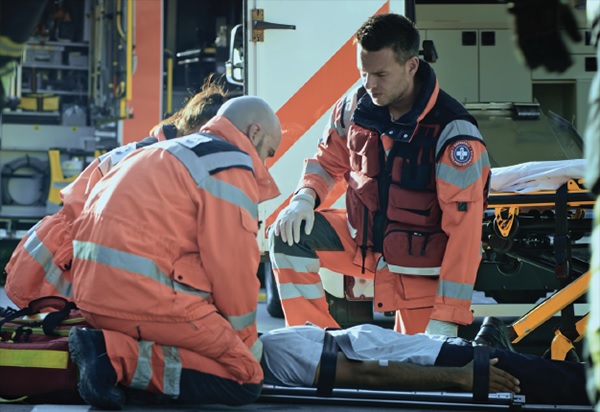
You’ve gotten to the point of your EMT program where you have been cleared to begin your ambulance, hospital, or clinic rotations. For many of you, this will be the first time you’ve stepped foot into a hospital or ambulance. It can be quite daunting. This is a whole new world for you. What if you mess up? What if your preceptor doesn’t like you? What if you completely forget EVERYTHING you’ve learned thus far???
WHAT IF YOU ACCIDENTALLY KILL A PATIENT???
Don’t worry, we’ve all been there (whether we like to admit it or not). Here’s what you need to do:
- Get a good night’s rest. The last thing you want to do is yawn or god forbid fall asleep. Some programs it actually can lead to expulsion from the course if you are found sleeping. Prepare for this like it’s your first day of work. Also, make a good impression. This could be your future employer!

- Be prepared. Make sure you have all of your required paperwork and necessary equipment. This is everything from your evaluation sheets, to your uniform, stethoscope, and watch. The last thing you want to do is be unprepared. Depending on the service, you may only be able to have your paperwork signed at the end of the shift. If you don’t have the correct forms to be signed, then there is a chance you won’t get credit for that clinical. I know when I was in paramedic school, on one of my shifts my paperwork was soaked by spilled coffee. Luckily, I had a spare set in my car, otherwise that entire 12 hour shift would have been for nothing.
- LISTEN TO YOUR PRECEPTOR!!! I can’t stress this enough. The whole point of you doing this is to learn how we do things in the field. If you haven’t been told already, MOST of the stuff you will learn in class, you’ll never actually use in the field. Many EMT/Paramedics will tell you that you start learning how to be an EMT on your first day of work. So this is probably the most important thing you need to do.

- Be honest with yourself and your preceptors. If you don’t know something, then say something. Don’t lie and say you know how to do something you don’t. This one in particular is a big deal for me. When I have a student on the truck, I will do my best to let them use any skills that they are able to perform. Before any intervention, I always ask of they are confident in performing the skill. If not, then I can either show them how to perform the task or I can walk them through it. This gets disrupted when a student says they know how to do something, when in fact they don’t. Most of the time, if a student lies to me, that’s a “nail in the coffin” for me. At that point, they have lost my trust and I’m much less likely to allow them to perform tasks on the truck. Now, everyone has to start somewhere, so I understand if you know how to perform a task but you aren’t proficient yet. But there is a MAJOR difference between lack of understanding and a lack of skill. You need to be honest with yourself about your skill base; the overall outcome of your clinical directly depends on YOUR desire to LEARN.

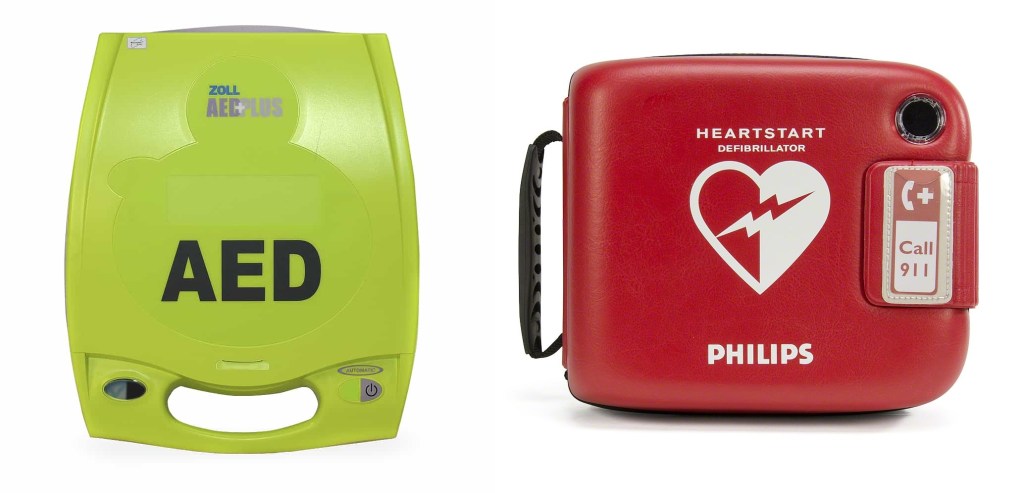
- Like I said before, be honest with yourself. If there is a skill that you don’t feel confident with, tell your preceptor. Their job is obviously to treat the patient, but they are also tasked with teaching you. This goes back into what I said before, don’t lie. Equipment varies. Sometimes these differences are minor; however, other times it is a “night and day difference”. While it isn’t your responsibility to immediately know how to use EVERY version of every piece of equipment, it is your responsibility to learn it before your shift. So say you were taught how to use a Phillips AED, but you get on the truck and they have a Zoll AED. Now most equipment in EMS is similar, regardless of the brand. But there are some differences. The reason I bring up these two brands is because the Phillips is in a hard fabric case. You unzip the case and the buttons are all right there versus the Zoll AED, which doesn’t have a case. You open the lid of the AED, which is all one piece, and there are your buttons. So like I said, not a HUGE difference, but if you’ve never used them, this can be a very confusing. So before your shift starts, look over the equipment and tell your preceptor if you are unsure about any of it.
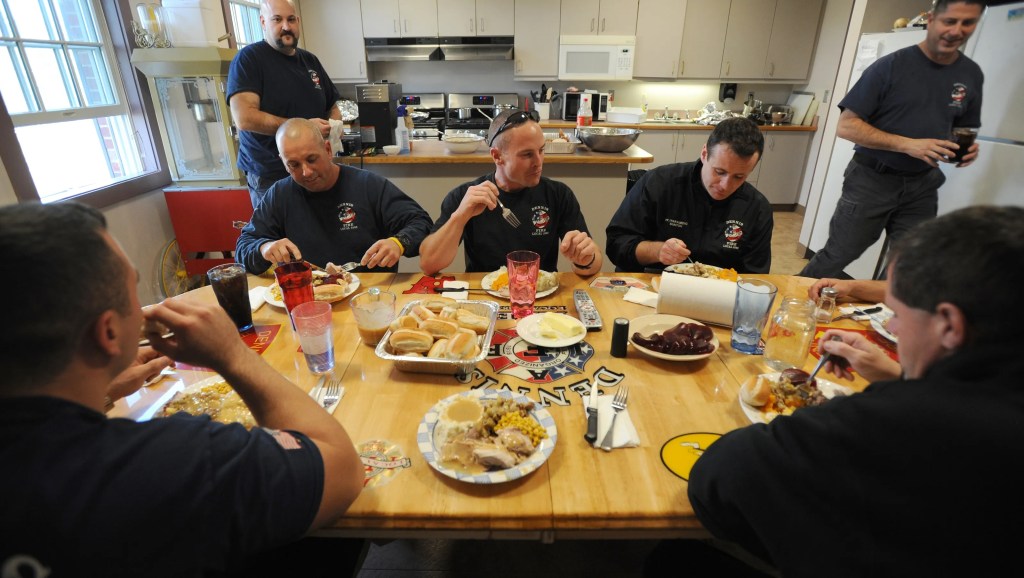
- Be part of the team. This one seems pretty self-explanatory, but be involved in the crew. This is everything from eat breakfast with them, to perform skills on calls, to sitting out in the bay or at post and talk about anything that comes up. When I was in EMT school, I was assigned to a fire station for 12 of their 24 hour shift. Within the first hour of my shift, my preceptor asked if I wanted to eat breakfast with them. I’m not a big breakfast fan, so I declined the offer. After this, there was a SIGNIFICANT change in attitude at the station. I already was on edge being in a new environment, but at this point I really felt like an outcast. This showed in the rest of my clinical and still to this day is probably the worst clinical I have ever been on. But that’s just one part of it. Also be involved on the call. You’re not just there to observe, regardless of what you’ve heard. You are there to be a member of the team. Sometimes this means you get dirty and get into a muddy ditch on the scene of an MVC, or you kneel on a dirty bathroom floor of a rest stop to do compressions on a cardiac arrest. Yes, you are going to get dirty and you are going to get covered in all types of body and non-body fluids, it’s just part of the job.
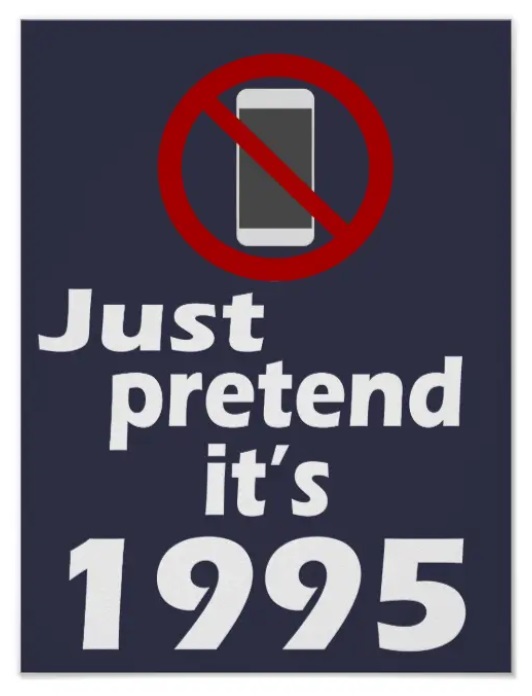
- DON’T SIT ON YOUR PHONE ALL DAY!!! This one should be self-explanatory, but you are there to work and to learn. In between calls you can check your phone, but don’t be sitting in the back of the room during a cardiac arrest scrolling through social media or watching videos on your phone.
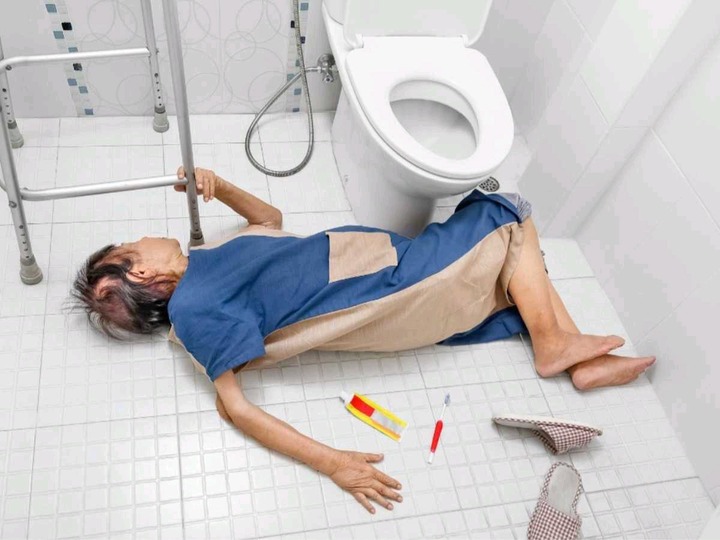
- And finally, bring a spare change of uniform. Like I said before, you are going to get dirty. Our patients are not lying on tables in a classroom like the mannequins are in school. Think of the worst possible location a patient could be and more than likely that’s where they’ll be. I can’t count on one hand the amount of times I’ve worked a cardiac arrest in a little room. Little old ladies LOVE going into cardiac arrest between the toilet and the bathtub.
So in summary, be prepared. Be willing and wanting to learn. These clinicals are for you; you will only get out of them what you put into them. For a lot of services, this is the last time you will have the backup of having two other EMS personnel on a call with you. Once you graduate, there is a chance you’ll be thrown on a truck with just you and your new partner.
 Medic Minute