
As you may have heard, I am currently in the process of moving across country. For the last ten years I have lived in Georgia. I am a current National Registry Paramedic, so when I found out I was moving, I was able to apply for reciprocity.
Reciprocity is the process of transferring your license from state to state. Most states in the United States honor the National Registry of Emergency Medical Technicians (NREMT) certification. When you complete a NREMT approved program and pass all of the required testing, you’ll be awarded a certificate that is valid for two years from NREMT. This certification needs to be renewed every two years to remain active with the NREMT. This certificate states you have met all of the requirements to obtain a license, according to NREMT. THIS IS NOT A LICENSE!!!

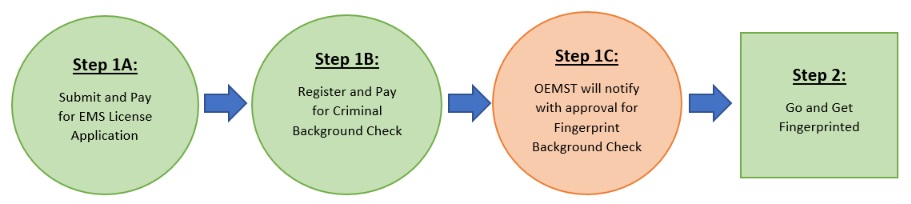
With this certificate, you can apply for your state license. Most states require you to submit fingerprints and a criminal background check, along with any other supplemental requirements for that particular state. When I started in EMS I lived in South Carolina and had to apply for reciprocity when I moved to Georgia. For that move, there wasn’t any additional requirements with the exception of a form to verify that I had an active South Carolina license in good standing. Some states do require additional training and/or exams to obtain a license in that state. I currently work for a company that is based out of Texas, so I am, at the time of writing this, in the process of obtaining my license in that state as well. For Texas, I had to submit my application, fingerprints, background check, state license verification, and also a Jurisprudence Exam. This exam covered some of the state specific laws in regards to EMS personnel. I am also moving to Wisconsin, so I needed to apply for reciprocity in that state as well. For them I needed to submit an application, fingerprints, background check, state license verification, and a Weapons of Mass Destruction class. NREMT Reciprocity doesn’t automatically grant you a state license in every state, but it does tell the states that you have been taught to the minimum requirements and are eligible for a license if they so wish.
Now there are some states that will recognize NREMT coming into their state; however, they are not a “National Registry state”. Three states in particular that are like this are California, New York, and Florida. What I mean by this is that they will honor an EMT/Paramedic coming into their state with a valid NREMT certification; however, these states do not have the same minimum requirements for their own EMT/Paramedic students. So for students in these states, if they decide to leave those states, other states may not offer reciprocity to these individuals. This became a problem for two friends and former coworkers of mine. One was a former Battalion Chief & Paramedic of 20+ years for Miami-Dade Fire Rescue, which is the busiest fire/EMS district in the country. When he moved to Georgia, he was dropped to an EMT-Basic. At this point in his career, he had no want or need to retake Paramedic school, so he remained an EMT-Basic and “tailboard firefighter” until he retired a couple of years ago. Another friend of mine was a Critical Care Paramedic from California who moved to Georgia. Again, he was dropped to an EMT-Basic. This gentleman decided to go back through Paramedic school and is once again a paramedic, but that is a lot of wasted time and energy.

So my advice for anyone, especially residents of one of these states, or anyone who plans to move there, is make sure you get your NREMT certification and keep it active. Yes it can be a pain sometimes due to the requirements to recertify, but I have heard nothing but horror stories from individuals who have either been unable to transfer their licenses or have to retake the NREMT exam. If you’ve read any of my blogs in the past, you’ll know that I have a HATRED for the NREMT written exam and have vowed to never again take that test. I have said it on numerous occasions that I will DIE with active Paramedic numbers, and I’m not kidding haha.

To find out what the requirements are for your state in regards to reciprocity, contact that state’s Office of EMS and/or Department of Health. Google is also your friend, just be aware that 3rd party sites don’t always have accurate and up-to-date information.
 Medic Minute