I mean, that’s what we did… Why isn’t that good enough???
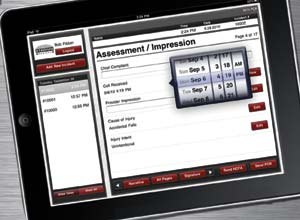
While this may be self explanatory, your report is just as important in this profession than performing medical treatment. Your report is a legal bound document that states what exactly happened on scene, during transport, and patient turnover. This report also “protects” the crew from certain liabilities and future lawsuits. I say “protects” because it will show proof of what was done, why, and the response to certain situations. However, this is only partly true. A written report can also indicate what WASN’T done right, or that certain parts of the patient’s care were left out all together.
So, what is in it for you to write a thorough report? It’s not like your pay is affected by how well your report is written, right?

Depending on your service, typically once you send off your reports, they are reviewed by your department’s Quality Control Department. This could be an entire division of the company, a panel of fellow paramedics, your supervisor, or even an independent quality control company. This just depends on who and where you work. Once it is “approved” it is sent to the state for their review. After the state completes their review, it will go off to the patient’s insurance and/or Medicare/Medicaid for payment. So, you would think that there is no way a poorly written report would make it that far, right? Well, think again…

Typically, reports are filtered according to what is done on scene and during transport. Calls that require multiple interventions are more than likely going to be individually reviewed, but what about the stubbed toe calls? Or transports to a doctor’s appointment? In a service that transports hundreds of patients a day/week/month, there are way too many reports to individually inspect. So most services use a filtering program to only pull the “severe” calls with multiple interventions. That leaves out those other “non-emergency” type calls. Those calls frequently get “approved” and make it up the chain for approval. If you’ve ever heard about billing issues from Medicare/Medicaid, it’s because of these type calls. Medicare/Medicaid are government-run programs. They have a lot of patients, so they want to make sure that their patients are getting the correct care that they are paying for, this leaves THOUSANDS of reports that are rejected because of errors.

So what does this have to do with your pay? Well, those reports are what get you paid. Now, 2-3 reports a year isn’t going to be enough money that your service can’t pay you, but these calls add up. The service I used to work for would have upwards of 1.5 million dollars worth of billing held every month because of this. So those little reports add up. But that’s not the only problem. Another large issue is that if a service repetitively makes reporting errors, they can be shut down by the state office of EMS. This is what typically happens to these small “mom & pop” transport companies. Once an investigation is started, the services will attempt to rename the business to keep going, but eventually they will be shut down for insurance fraud. What happens with a lot of these businesses is that they either render care that they are legally not allowed to (ie. An EMT performing ALS skills), or they fail to meet standards for their reporting. So yes, your report DIRECTLY relates to you getting a paycheck.

But what other functions does your report have? Well, say the call you respond to ends in a lawsuit. Your report will be pulled into court for clarification. If this happens, then you more than likely will be pulled in as well. If you’ve ever been pulled into court, you will typically get very little warning, and all you will have to defend your actions is the report you submitted. They may ask any question under the sun as to why you did something on a call. Now, I have a very good memory when it comes to calls I’ve run. I can point out just about every location I’ve ever run a call at. But what I cannot do is remember every event from those calls. It is nearly impossible to do that. So in the event you are called into court, can you remember every little action you made on a call? You better hope it’s in your report.

Now for the “fun” part… Your report can also be used against you in court. Without going into too much detail, a friend of mine was pulled into court for a call he ran with a pediatric death. In court, he was asked if everything he performed on scene was documented. When asked, he responded with “of course I did”. Unfortunately he failed to document that he placed a non-sterile sheet over the victim’s body. Per law, technically this individual entered additional DNA into a crime scene, which could have been listed as “tampering with a crime scene”. Now, any of us would have done the same in his situation. But you can see how this could have ended even worse than it already was.

As they’ve taught all of us from day one, “whatever isn’t documented didn’t happen”, however we live in a world where just about every person on the planet has a recording device in their pocket. While YOUR documentation may not show an intervention you performed, their camera may say otherwise. Rule of thumb: Always act like cameras are rolling and always do what is appropriate for your patient, no matter what. You never want to end up on the other side of the law.
 Medic Minute