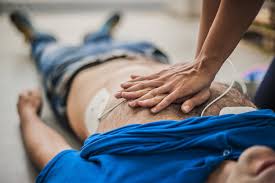
***Disclaimer: You can literally do EVERYTHING right and the patient still not make it. At the end of the day, there are some things out of your control and you have to be ok with that being the case. It’s just part of the job. All you can do is do your job to the best of your ability, and sometimes it will show, however, sometimes it won’t***

Now that we have that out of the way, I’m going to go out on a limb here and say many cardiac arrests are done poorly. It’s not for a lack of education or the responders not giving it their all. Cardiac arrest scenarios are the most practiced skills in all of EMS; however it is also one of the most out of date techniques we perform.
But how is that?
Doesn’t the American Heart Association (AHA) CONSTANTLY make changes to their cardiac arrest algorithm? They do, but that’s not the techniques I’m referring to. In EMS we blow off those CPR videos and make fun of the actors for “calling for a crash cart”. But what we aren’t taking away from these videos is the organization and delegation of tasks. What if I told you that with the exception of intubation, cricothyrotomy, & ECG interpretation, that the Paramedic should never lay their hands on the patient???

Now this is with the understanding that you are running this call with a “full crew”, consisting of anywhere from 2-4 EMTs and maybe even another Paramedic. The lead paramedic (typically the transporting paramedic) should be overseeing the entire call and delegating tasks. For our Fire Department folks, doesn’t Incident Command typically stage at a distance from a structure fire where they can command the entire scene? You’d never see the Incident Commander with a hoseline in their hands making entry into the residence, so why does this change for EMS???

Not to be “that guy”, but anyone who has ran a cardiac arrest with me will tell you that I rarely even don gloves on a cardiac arrest (THIS IS COMPLETELY UNTRUE IF ANY MEMBER OF MANAGEMENT IS READING THIS RIGHT NOW lol). Why is that? Because if I don gloves, then obviously I plan to need them. But if I’m doing skills, then it is physically impossible for me to monitor the scene as whole. Think of an arrest in the ER. Does the attending physician start an IV, or an IO, or do compressions? Or are they typically standing at the patient’s head, telling his staff what to do?
They don’t call us “ditch doctors” for nothing. Do as they would do. Monitor the scene and ensure that the correct things are getting done. Only in the event that there are not enough responders, or something is being done incorrectly, you should step in. This will also give you time to ensure that the arrest is being run effectively per ACLS protocols.
How many times on a cardiac arrest scene has it been asked “are we due for another Epi yet?” and the answer given is “I don’t know”. This isn’t acceptable. This isn’t trial and error; this is someone’s life you are messing with. These protocols are written for a reason, so let’s follow them to the best of our training and abilities.
Instead of administering that medication let an EMT (as long as it is within their scope of practice that is…) administer it. Contrary to belief, most EMTs like using the skills they are trained to do. I’m not saying let some brand new EMT-B grab a ET tube and do his thing, I’m just saying be smart about what you’re taking up precious time doing. Think of a cardiac arrest as a choreographed production, because that’s exactly what it is.

Your patient is the main lead in the production and all of the bystanders/family is your audience. They are watching your every move and scrutinizing EVERYTHING. But don’t stress, this production you’ve spent years working on. Just take a deep breath and do what you have been trained to do.
Lastly, don’t get stuck in your old ways. I have been in this career for about 15 years at this point, and I can confirm that I have seen NUMEROUS changes in how we do things in my few years of service. So don’t keep doing something because “that’s just how you’ve always done it” or “that’s how you were taught” 20, 30 years ago. Keep up to date on the latest science and protocols.
Here’s a neat trick I recently learned: Before intubating a patient, place a Nasal Cannula on them at 15lpm (yes I know they aren’t rated for that) for a couple minutes. With compressions, the patient’s body has a negative pressure that causes air to be pulled into the lungs. So they can either get normal air (about 21% oxygen), or they can get nearly 100% O2 during this crucial time. Cool huh? This is definitely not the common practice as of yet, but I can see this coming to a CPR class near you in the near future!
 Medic Minute