147B9379
I bet you didn’t read that number completely… And I bet you you didn’t notice it had a letter in it either. You also didn’t notice that the previous sentence had the word “you” written twice, did you???
This is an example of situational awareness.
We get so caught up in what we are doing, that we don’t take in the “whole picture”. This isn’t your fault though, it’s just human nature. We push aside what our brains perceive as invaluable information to be able to pay more attention to the task at hand. Sometimes this works in our favor, where other times it can be detrimental. I bring this up, because safety is commonly pushed aside because it is just “not that important”. But what is “not important” about your life?!?! We get so caught up in patient care and scene operations that we overlook one of the most important parts of any emergency scene.
There is not an EMT/Paramedic in the world that doesn’t know these words better than the back of their own hand. It is literally pounded into our brains on the FIRST day of EMT school and every day forth. But these few words are the easiest forgotten thing on nearly every call we go on.
Up until a couple years ago, there was a National Registry Psychomotor Exam scenario where you are responding to a male down in the woods. During the process of “running” this call, if you do not verbalize that you ensured the scene was safe, you would get a critical fail scoring because the “woods” that you are responding to is actually for hunting with live fire going off. Now this situation might seem farfetched, because in-person you would see warning signs and such in the area. But let’s talk about the less common scene safety concerns:
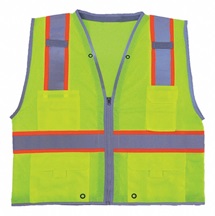
I’m pretty sure EVERY ambulance in the country has a couple of these balled up under the seats gathering dust, but why??? For what it’s worth, this is one of the cheapest and easiest things you can do to try and stay safe on a scene. Yet we shrug them off because they don’t look “cool”. Well not to be cliché and grim, but lying in a coffin doesn’t look “cool” either. Take the two seconds it takes to put one of these on before you get hit on the interstate during low visibility. If you’ve been in this business long enough, you or someone you know has been hit on a scene by a distracted driver. People can’t drive without their phones in their hands these days, so why are you giving them just another reason to not see you in front of them???
Now I’m not big on “war stories”, but I’m going to let this one slide. A couple years ago I ran a call for a “6 year old girl with behavioral issues”. Per my company’s policy we staged down the street until PD could confirm the scene was safe. Of course we were made fun of by the officers that responded to this “VERY SCARY LITTL E 6 YEAR OLD GIRL”. We got so caught in the moment and the ridicule that we followed them in to the scene. Staging on a call like this may seem ridiculous, but what was even more ridiculous was the two full grown male officers I saw jumping off the residence’s front porch because the “little girl” was wielding a MASSIVE butcher knife and was prepared to do what she needed to do to protect herself. The scarier part of this situation is that this little girl didn’t really know what she was doing. She knew it was “bad”, but probably didn’t grasp the full extent of her actions. Luckily in this case we were able to calm her down and persuade her into dropping the weapon. But this had a VERY high chance of not ending peacefully. How many scenes have you unknowingly walked into with weapons lying about, or aggressive patients/family members? Probably too many to quote. The EMS motto is “do no harm”, but what about these people who have a want to do us harm? How do you avoid this?
There’s not a whole lot you can do AFTER you’ve gone “too far”. But you might be able to avoid putting yourself in that position in the first place. I like to go into every call like I’m investigating a murder scene. I look at EVERYTHING when I’m entering a residence. Things like:
- Where are my exits?
- Do I see anything that could be used as a weapon?
- Is there a possibility of hidden weapons?
- How many people are in the residence?
- Does anyone pose harm to me, my crew, or our patient?
- Are there any potentially dangerous pets nearby?
- Are there any other environmental hazards to avoid?
Now some may say that this is a lot of unessential stress and paranoia, however to have this knowledge in the time of need is paramount. ALWAYS have a way out, and ALWAYS trust your gut. If you are dealing with a patient or a family member that is invading your personal space, don’t be a “tough guy” and just deal with it. Like anything else in life, you’re better safe than sorry. At the end of the day, yes others might talk about you in a negative way because you “didn’t feel safe”, but I would much rather deal with that then to not be able to go home to my wife and daughter at the end of my shift. Your pride does nothing but harm to yourself, so why defend it? Do your job to your best ability and get home safe. THAT IS YOUR ONLY JOB REQUIREMENT!!! Anyone who says otherwise is sadly misinformed.
Long story short, be safe and observant. Don’t treat every call the same. My former Captain once told me “You’ll never know everything about this job. The day you think you do, you need to get the hell off the truck because you’re going to get someone killed”.
Train.
Train.
Train.
(And then do some more training after that…)
There is no amount of training in this world that is going to prepare you for EVERY call you go on, but don’t let every call be your first either.
 Medic Minute